
Benchmark BSE Sensex settled above the 63,000-level for the first time on Wednesday, extending its winning momentum to seventh day amid a largely positive trend in global markets and continuous foreign fund inflows.

Indian banks have started exploring opportunities in the space, including lending to crypto exchanges, and accepting bitcoins as collateral, among others.

The Saradha Group had been raising deposits from the public with a promise to double the money invested within a short period.

Equity benchmark indices fell sharply on Tuesday, with the Sensex tumbling nearly 844 points, in line with weak global market trends and foreign fund outflows. The 30-share BSE benchmark slumped 843.79 points or 1.46 per cent to settle at 57,147.32. During the day, it tanked 940.71 points or 1.62 per cent to 57,050.40.

Is the worst over for Indian banks? The past two years saw them ride on treasury trades as deposits soared and credit growth dipped sharply. Gross and net non-performing assets (NPAs) moved south, and the provision coverage ratio (PCR), capital buffers, and profitability indicators are back at pre-pandemic levels. So, what's the plot ahead?

Physical KYC takes anywhere between two to five working days to get done, V-KYC, only a few minutes.

In the Sensex pack, Mahindra & Mahindra, Tata Steel, Tata Motors, Maruti, Larsen & Toubro, HDFC, HDFC Bank, Tech Mahindra and Bharti Airtel were the major laggards. Asian Paints, Bajaj Finserv, Power Grid, Reliance Industries, NTPC and UltraTech Cement were among the gainers.

Investors became poorer by over Rs 4.47 lakh crore on Friday as markets faced severe drubbing, mirroring weak trends in global equities. The 30-share BSE benchmark dived 866.65 points or 1.56 per cent to settle at 54,835.58. During the day, it tumbled 1,115.48 points or 2 per cent to 54,586.75.

Has Vijay Shekhar Sharma given up on the bank? For now, he seems to be on a save-OCL mission. The bank will face its logical end, observes Tamal Bandopadhyay.

Among the Sensex firms, Tata Motors jumped over 3 per cent. Tech Mahindra, Infosys, HCL Technologies, Axis Bank, Mahindra & Mahindra, ICICI Bank, UltraTech Cement and Kotak Mahindra Bank were the other major gainers. NTPC, Asian Paints, Titan and Power Grid were among the laggards.

The ruling Congress is seeking to retain power in Chhattisgarh by banking on the welfare schemes of the Bhupesh Baghel government, while the Bharatiya Janata Party is hoping to corner it on the issues of alleged corruption, religious conversions and unfulfilled poll promises.

Trading in the domestic stock market would be influenced by trends in the global equities, macroeconomic data and foreign fund movement in a holiday-shortened week, analysts said. Markets may face volatile trends on Monday after Federal Reserve Chair Jerome Powell's speech at the Fed's annual economic symposium in Jackson Hole on Friday.

Why are DIIs holding such a high stake in Zee, which is beset with alleged governance issues? Perhaps they think Zee is a deep-value stock, observes Debashis Basu.

A single application and a plethora of services for passenger cars - that is what myTVS, a brand that operates under Ki Mobility Solutions and is part of the TVS family, is set to bring to customers, in a bid to disrupt the concept of "super apps" in India. Starting July 15, myTVS will launch its connected car platform or super app called myTVS Life360 for aftermarket passenger cars. Through it, customers will be able to avail themselves of a range of services like maintenance, diagnostics, roadside assistance, accessories, payments, insurance, and so on.

The Supreme Court on Wednesday asked the Jalan-Kalrock consortium, the new owners of cash-strapped Jet Airways, how much have they paid towards dues on account of provident fund and gratuity to the former employees of the troubled airline. The top court made the query while commencing the hearing on a batch of petitions, including the one filed by the Jet Aircraft Maintenance Engineers Welfare Association, against the October 21, 2022 order of the insolvency appellate tribunal NCLAT.

The operating environment is unpredictable, but if the bank can't give a clear picture of what's in store, calling the bottoming out of its asset quality stress is nearly impossible.

We all need an expert whose advice you can trust, who will not start pushing products at you and rather help you understand why your wealth is not growing as it should, says Erik Hon.

Assume the worst regarding how long your unemployment could last and make conserving cash your topmost priority, suggests Sanjay Kumar Singh.
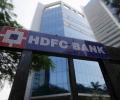
Global rating agency Moody's on Monday said HDFC Bank's multiple digital outages are credit negative as such recurring incidents could lead to moderation in revenue and flight of customers to other banks. The recurring outages also risk hurting the bank's brand perception among a growing and increasingly digitally savvy customer base, and increases the potential that clients switch to other banks, which would lead to a reduction in revenue and low-cost retail funding, Moody's said in a statement.

'Those who want stability in life have started looking at opportunities outside of the start-up ecosystem.'

If you don't have a specific goal, but want intermittent liquidity, then ladder your FDs, that is, invest in FDs of varying maturities, such as one, two, three, five or even 10 years. Laddering ensures FDs mature at regular intervals.

To ease pressure due to the coronavirus lockdown, corporate have asked banks and the government for a six-month liquidity line, so that they can pay off their suppliers and employees.
As many as 75 million households that do not have access to banking services will be covered and at least one bank account opened for each household, against the earlier proposal of two.

When the landslide hit, Sruthi's house was washed away, along with its inhabitants. She lost her entire family and some relatives. All she had left for a close confidante was her fiance Jenson. Days after the landslide and the loss of her family, Jenson died in a road accident that also left Sruthi with serious injuries. News of the accident and Sruthi's backdrop as the lone surviving member of a family wiped out in the July landslide, was picked up by the media, and people rushed to help.

In the backdrop of the crisis brewing at Paytm Payments Bank, major fintech companies are ramping up their workforce and inducting new faces in their leadership teams, industry sources said on Wednesday. Users will not be able to add funds to their Paytm Payments Bank Wallet after February 29, though they will still be able to use the services and the existing balance in the wallets, according to the Reserve Bank of India (RBI) diktat. Industry sources said that competitors to Paytm are investing heavily in offline payments while doubling their salesforce.

For development finance institution to succeed now, the government must stand like a rock behind it and be patient.

IT and ITeS companies accounted for $28.1 billion of the total investment pie during the first nine months of 2021.

'It will dictate the flow of funds into the index. We will maintain caution on mid/smallcaps.'

With liquidity crunch hitting operations, many finance companies have put the brakes on sanctions in the third quarter in the aftermath of the IL&FS crisis.

GST will now apply to mutual funds, loan instalments and credit card dues.

Benchmark indices managed to settle in the positive territory on Friday, with the Sensex climbing over 59 points, as fag-end volatility trimmed most of the day's gains. A largely firm trend in global markets and foreign fund inflows propped up the bourses, traders said. The BSE Sensex climbed 59.15 points or 0.10 per cent to settle at 58,833.87.

His statement assumes significance in the light of scams in the state-owned banks.
Benchmark indices bounced back after falling in early trade on Thursday and logged the fifth day of gain amid a decline in crude oil prices and foreign funds inflow. The 30-share BSE Sensex climbed 284.42 points or 0.51 per cent to settle at 55,681.95. During the day, it jumped 340.96 points or 0.61 per cent to 55,738.49. The broader NSE Nifty went higher by 84.40 points or 0.51 per cent to 16,605.25.

The Indian equity market is likely to remain under pressure and rangebound over the next few months. This comes as global central banks, led by the US Federal Reserve look at a possibility of hiking rates aggressively to tame inflation. Back home, the Reserve Bank of India, too, remains data dependent in its endeavour to keep inflation in check and pursue an aggressive monetary policy stance.

Benchmark indices failed to hold on to early gains and closed in the red for the seventh straight session on Thursday, with participants remaining in wait-and-watch mode ahead of the RBI's interest rate decision. Unabated selling by foreign funds added to the pressure, though a modest recovery in the rupee cushioned the fall, traders said. After rallying in early trade, the 30-share BSE Sensex came under selling pressure in the afternoon session and closed 188.32 points or 0.33 per cent lower at 56,409.96.

What stood out in his 15-year journey as a member of the political executive at the Centre was his glowing record as India's most successful and effective finance minister. Both as prime minister and finance minister, he understood the importance of gradualism, except when the economy or the polity was in a crisis.

'If individual stocks start falling 25% to 30% or more, then I doubt how many of them will be able to withstand that (kind of selloff). That is when you'll see panic coming in.'

In a remarkable comeback, foreign portfolio investors (FPIs) have pumped Rs 1.7 lakh crore into the Indian equity markets in 2023, propelled by confidence in the country's robust economic fundamentals amid a challenging global landscape. The year 2023 has witnessed massive investment by FPIs, thanks to the sharp uptick in inflows of Rs 66,134 crore in December. Going forward, FPI flows are expected to be robust.

'Clients deemed higher-risk are required to update their KYC more frequently.'

'In the short term you keep your return expectations very, very low; in the medium term be prepared to invest and in the long term growth will come and your returns from stocks will be high.'
 © 2026 Rediff.com - Advertise with us - Disclaimer - Privacy Policy - Sitemap - Feedback - About us - Terms of use - Grievances